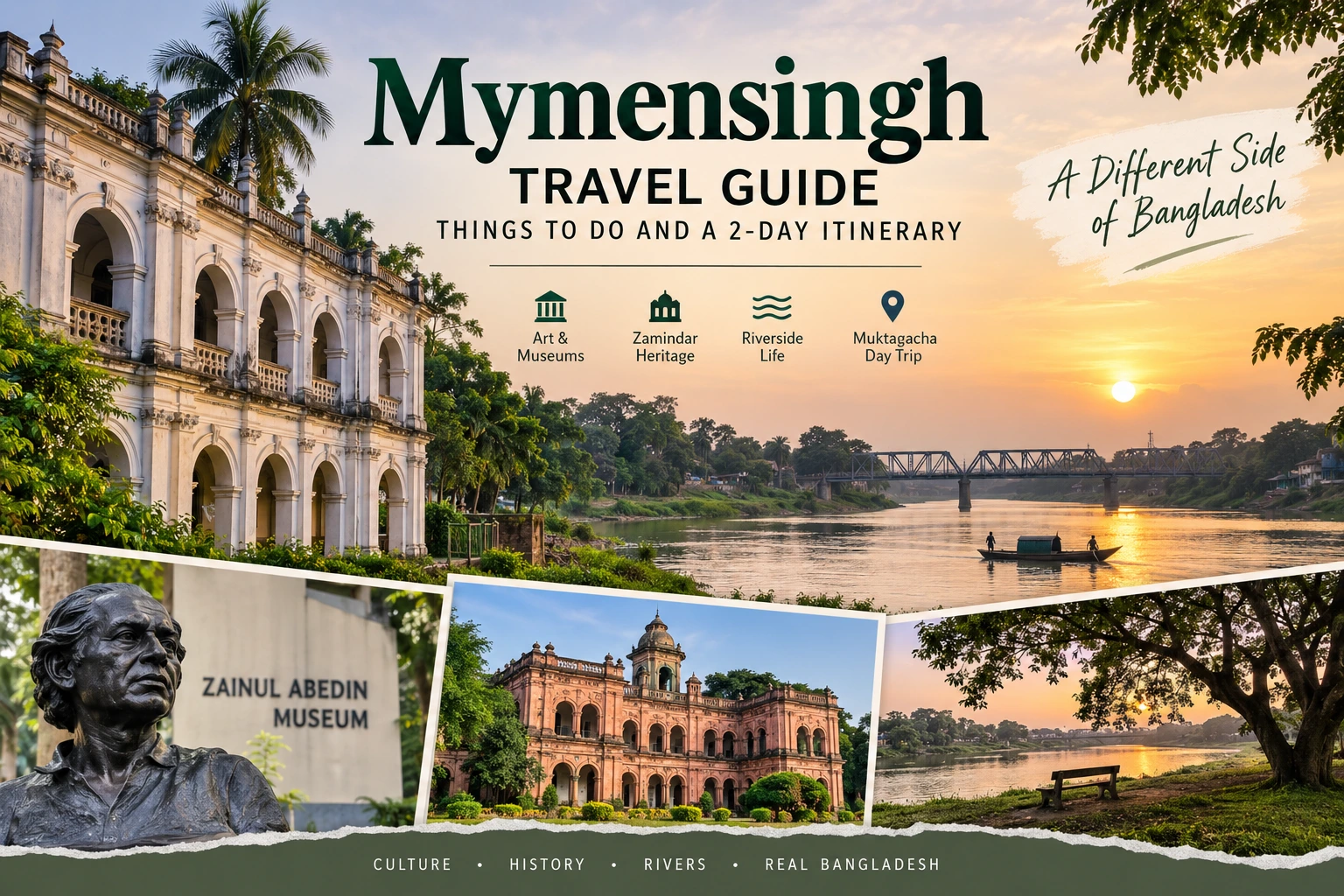
Mymensingh is one of Bangladesh’s most rewarding under-the-radar cities. Set beside the Old Brahmaputra River, it brings together modern Bengali art, zamindar-era architecture, university life, busy markets and an easy day trip to Muktagacha. It is not a polished resort destination—and that is precisely why curious travelers can find it so memorable.
For visitors from the United States and other overseas markets, Mymensingh works best as a two-night cultural stop from Dhaka. The journey is manageable, the essential sights fit comfortably into two days, and the city provides a gentler introduction to regional Bangladesh than a hurried tour across the entire division.
This Mymensingh travel guide focuses on Mymensingh city and one practical excursion to Muktagacha. It does not treat distant Birishiri, Sherpur, Jamalpur or every attraction in Mymensingh Division as if they were city sights. That distinction gives travelers a realistic plan and keeps the page focused on the search intent behind “things to do in Mymensingh.”
Quick Answer: Is Mymensingh Worth Visiting?
Yes. Mymensingh is worth visiting for art, riverside life and Bengal’s zamindar heritage. The essential experiences are the Zainul Abedin Museum, the Old Brahmaputra riverfront, Shashi Lodge and a half-day trip to Muktagacha Rajbari. Two days is ideal for a first visit; one day covers the city highlights but leaves little room for Muktagacha.
Mymensingh is best for travelers who prefer local context to checklist tourism. Do not expect international-chain hotels, extensive English interpretation or nightlife aimed at foreigners. Expect instead a living regional city where museums, palace remains, tea shops, university grounds and the river reveal different chapters of Bangladesh’s story.
Where Is Mymensingh, Bangladesh?
Mymensingh is a city in north-central Bangladesh and the administrative center of Mymensingh Division. It stands on the Old Brahmaputra River, roughly north of Dhaka, and is connected to the capital by rail and road. It is close enough for a short extension but deserves at least one overnight stay.
The place name can describe the city, district or division. These are not the same itinerary. Mymensingh city contains Shashi Lodge, the Zainul Abedin Museum and the riverfront. Muktagacha is a nearby upazila within Mymensingh District. Birishiri lies in Netrokona District and needs separate planning. A strong city guide should make those boundaries clear instead of advertising every division-wide attraction as “nearby.”
For international travelers, Mymensingh offers a useful contrast with Dhaka. The capital is dense, fast and monumental; Mymensingh is smaller, slower and closely connected to the river and surrounding agricultural region. Visitors can understand both cities better by seeing them together.
Why Visit Mymensingh?
Mymensingh gives travelers three strong reasons to stop. First, it is central to the story of Zainul Abedin, the pioneering modern artist whose images of famine and rural Bengal shaped the country’s visual culture. Second, its palaces preserve the complicated legacy of the zamindari landholding system. Third, the Old Brahmaputra riverfront offers a social space where everyday city life unfolds.
Those themes connect naturally. Art documents rural experience; palaces represent elite power; the river supported settlement, exchange and imagination. Visiting with that framework is more meaningful than collecting photographs at unrelated landmarks.
The city is also relatively absent from conventional Bangladesh itineraries. That creates an opportunity for thoughtful travel, but it demands realistic expectations. Opening schedules may change, historic buildings may be under repair, and English interpretation may be limited. A local guide can turn those uncertainties into a coherent experience.
Best Things to Do in Mymensingh
Most major Mymensingh tourist attractions sit within or close to the urban area. Confirm opening hours and access shortly before visiting, particularly on public holidays, museum closing days and during maintenance.
Visit the Zainul Abedin Museum
The Shilpacharya Zainul Abedin Sangrahashala—commonly called the Zainul Abedin Museum—is the city’s most important cultural institution. It was established in 1975 on the bank of the Old Brahmaputra and preserves work connected with Zainul Abedin, who spent part of his early life in Mymensingh and became a foundational figure in modern Bangladeshi art.
Do not approach the museum only as a gallery of attractive pictures. Abedin’s artistic legacy is inseparable from rural Bengal, human hardship and the 1943 famine. Even when particular works rotate or galleries are unavailable, understanding that context helps visitors see why the museum matters nationally.
Allow at least an hour. Ask whether photography is permitted before using a camera, and confirm the current weekly closing day. English labels may be limited, so an art-informed guide or advance reading can greatly improve the visit. Afterward, continue outside to the riverfront; the physical setting connects the collection to the landscape that influenced the artist.
Walk Along the Old Brahmaputra Riverfront
The Old Brahmaputra is the city’s geographic and emotional anchor. Around Shilpacharya Zainul Abedin Udyan and the Circuit House area, residents walk, talk, snack and gather in the cooler hours. Late afternoon is usually the most comfortable time to experience the riverfront.
The attraction here is atmosphere rather than a single monument. Watch boats and changing light, sample tea from a busy vendor, and notice how public life organizes itself along the water. Keep valuables secure in crowds and ask before making close portraits.
Water levels and the appearance of the river change by season. Do not expect the immense channel suggested by the name “Brahmaputra” at every time of year. The river beside Mymensingh is the Old Brahmaputra channel, and its quieter character is part of the city’s identity.
Explore Shashi Lodge
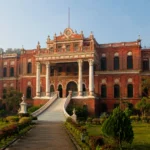
Shashi Lodge is Mymensingh’s signature palace. Bangladesh Tourism Board explains that Suryakanta Acharya Chowdhury of the Muktagacha zamindar dynasty created the palace and that the original structure was destroyed in the 1897 earthquake. Shoshikanta later rebuilt it between 1905 and 1911.
Its formal facade, columns, central approach and European-influenced decorative language make it one of the city’s strongest architectural stops. Yet the building should not be romanticized without context. Zamindar wealth existed within a landholding system that shaped the lives of tenants across Bengal. A good visit balances architectural appreciation with social history.
Access to interiors and particular areas can change because of conservation, institutional use or maintenance. Confirm before promising an indoor tour. Even when only exterior access is available, a knowledgeable explanation can connect Shashi Lodge with Muktagacha Rajbari and the broader Acharya family story.
See Alexandra Castle From an Appropriate Viewpoint
Alexandra Castle—also spelled Alexander Castle—is another unusual remnant of Mymensingh’s landed elite. Its current condition and access have been subjects of concern, and parts of the property may be restricted, occupied or unsafe.
Treat it as a contextual stop, not a guaranteed palace tour. View the exterior only from a lawful and safe position, follow local instructions, and never enter a deteriorating structure without permission. Travelers should resist social-media advice that encourages climbing, trespassing or exploration of fragile interiors.
The castle helps explain the European architectural tastes adopted by some Bengali landholding families. Paired with Shashi Lodge, it creates a useful discussion about status, colonial influence and conservation challenges.
Explore the Bangladesh Agricultural University Area Respectfully
Bangladesh Agricultural University gives Mymensingh a distinctive academic character. Its spacious campus and botanical garden frequently appear on visitor lists, but this remains a functioning university—not a theme park.
Ask whether overseas visitors may enter the campus or botanical garden on the intended date. Carry identification, follow security instructions and avoid photographing students or research facilities without consent. During exams, official events or heightened security, access may be limited.
When entry is possible, the campus adds a contemporary layer to the trip. Mymensingh’s surrounding economy is deeply connected to agriculture, and the university represents research and education that serve that wider landscape.
Browse Ganginarpar and Local Markets
Ganginarpar and the surrounding commercial streets reveal modern Mymensingh through clothing shops, food sellers, pharmacies, electronics, rickshaws and constant local movement. A short guided walk is more useful than an aimless shopping session.
Visit in the morning or later afternoon to avoid the strongest heat. Carry small amounts of cash, keep your phone discreet and ask before photographing shopkeepers. If buying handicrafts or food gifts, request information about ingredients and materials.
Markets are not exhibitions created for visitors. Approach people as participants in their own working day, not as visual props. That simple attitude produces better conversations and more ethical travel photography.
Visit Religious Sites With Permission
Mymensingh contains mosques, temples and other places of worship that express the city’s plural cultural history. Boro Kali Bari is often mentioned among older Hindu sites, while neighborhood mosques shape daily public life.
Only enter when visitors are welcome. Dress modestly, remove shoes where required, avoid prayer times unless invited, and ask before taking photographs. A respectful visit can add depth, but no religious space should be treated as a compulsory tourist attraction.
Consider Mymensingh Museum as an Optional Stop
Mymensingh Museum was created to preserve regional artifacts, including material associated with local zamindar estates. Published information about its displays and condition has varied over time.
Check whether the museum is currently open and worthwhile before adding it to the day. If access is uncertain, prioritize the Zainul Abedin Museum, whose artistic significance gives it a clearer role in a first-time itinerary.
Muktagacha Day Trip From Mymensingh
Muktagacha is the most logical heritage excursion from the city. It combines a historic zamindar complex, a famous local sweet and small-town street life. Plan it as a half-day or relaxed day trip rather than inserting it between several distant attractions.
Explore Muktagacha Zamindar Bari
Muktagacha Zamindar Bari is a large historic estate complex associated with the same zamindar lineage that shaped Shashi Lodge. Its courtyards, gateways, temples and surviving residential structures communicate scale and decline more powerfully than a restored showpiece might.
The site is fragile, and restoration or access conditions can change. Wear closed shoes, avoid unstable floors and walls, and follow instructions from caretakers or archaeology staff. Do not climb onto masonry for photographs. Some areas may remain in community or religious use, so ask before entering.
A guide should explain how the estate relates to Shashi Lodge rather than repeating a list of dates. The two sites work as a paired story: Muktagacha shows the dynasty’s territorial base, while Shashi Lodge reflects its urban presence in Mymensingh.
Taste Muktagacha Monda
Muktagacha is widely known for monda, a dense milk-based sweet associated with the town. Trying it at a reputable, busy shop is part of the day-trip experience, but travelers should distinguish cultural interest from unverified claims about a single “original” seller.
Ask when the batch was made and how long it keeps. Monda contains dairy and sugar; travelers with allergies, lactose intolerance or dietary restrictions should confirm ingredients. If carrying sweets back to Dhaka, request secure packaging and keep heat exposure in mind.
How to Reach Muktagacha
Muktagacha lies west of Mymensingh city and is normally reached by road. A reserved car is the easiest option for foreign visitors because it gives control over timing and avoids complicated transfers. Road time varies with traffic, weather and the exact starting point.
Leave after breakfast, visit the zamindar complex before the midday heat, stop for monda and return to Mymensingh for lunch or early afternoon. Confirm site access before departure so the trip does not become only a sweet-shop visit.
A Practical 2-Day Mymensingh Itinerary
This plan assumes two nights, a centrally located hotel, confirmed museum hours and a car for Muktagacha. It favors depth over an exhausting attraction count.
Day 1: Art, Palace Heritage and the River
Begin at the Zainul Abedin Museum when it opens. Spend time with the artist’s historical importance, then walk or drive through the riverfront area. Pause for tea and an early lunch at a reputable local restaurant.
Visit Shashi Lodge in the afternoon, subject to current access. Add a short exterior stop at Alexandra Castle only if a guide confirms that it is safe and meaningful. Do not sacrifice time at Shashi Lodge to chase a restricted building.
Return to the Old Brahmaputra for sunset. The cooler light, local gatherings and river breeze create the best close to the first day. Eat dinner near the hotel and keep the evening flexible.
Day 2: Muktagacha and Contemporary Mymensingh
Drive to Muktagacha after breakfast. Explore the zamindar complex carefully, learn how it connects with the palaces in Mymensingh, and sample monda from a trusted shop. Return to the city around lunchtime.
In the afternoon, visit the Bangladesh Agricultural University campus or botanical garden if permission has been confirmed. If access is unavailable, choose a market walk, religious-heritage stop or additional riverfront time.
End with an early meal and prepare for the return to Dhaka. Keeping the second evening light provides a buffer for traffic and access changes.
One-Day Mymensingh Itinerary
With one full day, prioritize the Zainul Abedin Museum, Shashi Lodge and the Old Brahmaputra riverfront. Add one market or food stop. Skip Muktagacha unless palace heritage is your main interest and you have a private vehicle; otherwise the day becomes dominated by transfers.
Dhaka to Mymensingh: Train, Bus or Private Car
Travelers can go from Dhaka to Mymensingh by train, bus or private vehicle. The train is often the most comfortable and atmospheric option, while a private car offers door-to-door flexibility. Actual journey time depends on service, congestion and weather, so do not schedule an international flight immediately after the return.
Dhaka to Mymensingh by Train
Bangladesh Railway runs services through Mymensingh and publishes official schedules and e-ticketing. Train names, times, weekly closure days and seat availability can change; verify them on the official Railway website for the travel date rather than copying a timetable from an old blog.
Book in advance when possible, particularly before weekends and holidays. Use the passport name required by the ticketing system, save the ticket offline and arrive early enough to locate the platform. An air-conditioned seat is usually the easiest choice for a first-time foreign visitor.
Carry water, hand sanitizer, snacks and a light layer for air-conditioning. Keep luggage within sight and reconfirm the departure station in Dhaka; the city has more than one rail stop.
Dhaka to Mymensingh by Bus
Long-distance buses connect Dhaka and Mymensingh. They can be economical and frequent, but departure points, vehicle quality and travel time vary. Ask a hotel or established operator to identify a reputable air-conditioned service and the correct terminal.
Dhaka traffic can add substantial time before the intercity journey even begins. Avoid a connection that depends on an exact arrival minute. At the Mymensingh end, arrange the hotel address and onward ride before departure.
Dhaka to Mymensingh by Private Car
A private car is the simplest option for a family, photography team or traveler carrying substantial luggage. It can also combine the outward or return journey with carefully chosen stops, though adding unrelated attractions usually makes the day too long.
Request a roadworthy vehicle, seat belts, an experienced intercity driver and a written price that states fuel, tolls, parking, driver meals and overnight allowance. Build in a comfort stop and avoid unnecessary night driving.
Getting Around Mymensingh City
Rickshaws and auto-rickshaws handle short local trips, while a reserved car is more efficient for a full sightseeing day. Agree on fares before informal rides or ask a guide to assist. Pedestrian conditions vary, so a location that looks close on a map may not offer a comfortable walk.
A local guide is particularly valuable for heritage interpretation, Bengali-language coordination and checking access. The guide should also help obtain consent for photography and adapt the route when a site is closed.
Keep daily plans geographically simple. Group the museum and riverfront together; combine palace sites in a second cluster; reserve Muktagacha for its own excursion. This reduces time in traffic and creates a clearer story.
Where to Stay in Mymensingh
Mymensingh offers local business hotels and guesthouses rather than a deep international-hotel market. Recent, independently verifiable reviews matter because standards and management can change.
Foreign guests should ask potential hotels:
- Do you accept international passports and complete the required guest registration?
- Can you arrange pickup from Mymensingh railway station or bus terminal?
- Is sealed or properly filtered drinking water available?
- Are backup power, working air-conditioning and reliable hot water provided?
- Can staff communicate in English or contact an English-speaking guide?
- Is late check-in possible if the train or road journey is delayed?
- Can the kitchen handle allergies and vegetarian requirements?
Choose a central property for shorter transfers, but ask about street noise. Confirm the total price, taxes, breakfast and cancellation terms in writing. Do not rely on old “best hotels” lists without checking current guest feedback.
What to Eat in Mymensingh
Mymensingh’s food experience is built around Bengali staples: rice, fish, lentils, vegetables, bhorta, meat curries, tea and sweets. Freshness and hygiene matter more than chasing a long list of supposedly famous dishes.
Try a Balanced Bengali Meal
Ask for rice, dal, a seasonal vegetable and freshly cooked fish or meat. Bhorta—ingredients mashed with seasoning, chili and often mustard oil—offers strong local flavor, but request mild preparation if you are sensitive to heat.
Choose busy restaurants with good turnover. Eat food while hot, use sealed or reliably filtered water and clean hands before meals. Travelers with allergies should carry a translated card because hidden ingredients may include nuts, dairy, mustard or shrimp paste.
Make Muktagacha Monda the Sweet Highlight
Monda is the most place-specific food experience in this itinerary. Taste a fresh portion in Muktagacha rather than buying an excessive box immediately. Ask about refrigeration, shelf life and packaging before carrying it onward.
Enjoy Tea and Snacks Responsibly
Tea stalls are social spaces and can produce easy conversations. Choose a popular stall, watch that water is boiled and avoid pre-cut fruit that has been exposed. Ask before photographing the vendor or customers.
Best Time to Visit Mymensingh
November through February generally provides the most comfortable weather for museum visits, river walks and Muktagacha. Mornings can be foggy and evenings may feel cool, so pack a light layer. Fog can also affect road and rail timing.
March and April are hotter. The monsoon usually brings humidity, intense rain and green landscapes; it can also slow road travel and make fragile heritage sites slippery. Build additional time into a rainy-season plan and protect electronics.
Festivals and university events can add cultural interest but may also increase crowds or restrict access. Check the forecast, public-holiday calendar and local situation shortly before departure.
Mymensingh Travel Costs and Money
Fixed daily budgets become inaccurate quickly. Estimate the trip from its components: Dhaka transport, two hotel nights, a city car or local rides, a guide, Muktagacha transport, admissions, meals, drinking water and a contingency amount.
Carry Bangladeshi taka in small denominations. Cards may work at some established hotels but should not be assumed for local transport, admission booths or sweet shops. Use reputable banks or authorized exchange services and retain receipts when appropriate.
Before hiring a tour operator, ask for written inclusions. Confirm whether the price covers fuel, tolls, parking, admission fees, guide service, driver expenses, station pickup and waiting time. A clear quotation prevents misunderstandings more effectively than bargaining after the trip.
Safety and Etiquette for American and Foreign Visitors
As of this guide’s September 2026 research date, the U.S. Department of State advises travelers to exercise increased caution in Bangladesh because of unrest, crime, terrorism and kidnapping, with “Do Not Travel” warnings for specified areas outside this itinerary. Mymensingh is not named among those prohibited areas, but conditions can change. Read the entire current advisory, monitor local news and follow instructions from authorities.
Avoid demonstrations and political gatherings. Use arranged transport after dark, keep passport copies separately from the original, and protect phones and wallets in stations and markets. Save Bangladesh’s national emergency number 999 and your embassy details offline. Travel insurance should cover medical care, disruption and evacuation appropriate to your circumstances.
Dress modestly, especially at religious sites and outside major hotels. Ask before photographing people, homes, worship, police, government property, bridges or transport infrastructure. Drone use requires specific permission; do not bring or fly one casually.
Medical facilities outside Dhaka may be limited for complex cases. Carry regular medication, a basic first-aid kit, mosquito repellent and oral rehydration salts. Drink safe water and take heat or monsoon exposure seriously.
How Mymensingh Fits a Longer Bangladesh Itinerary
Mymensingh pairs naturally with Dhaka. First-time visitors can Discover Dhaka City, then travel north for two quieter days of art, river life and zamindar heritage. This creates contrast without demanding a domestic flight.
Travelers drawn to architecture and social history may connect Mymensingh with A Cultural Tour elsewhere in Bangladesh. Panam Nagar near Sonargaon tells a different merchant-city story, so Visiting Panam City can complement rather than duplicate the palace narrative here.
Mymensingh is not normally part of a conventional multi-district northern itinerary, which tends to focus farther west on Bogura, Paharpur, Dinajpur and Rangpur. Keep those commercial and regional queries on their dedicated route page. If transport, permissions and local interpretation feel difficult to coordinate independently, an established Best Tour Agency in Bangladesh can create a realistic sequence and verify access.
These internal links serve different intents. This article should remain the informational authority for Mymensingh city, while tour pages should own booking and package searches.
Why Explore Mymensingh With Bangladesh Explore?
Mymensingh’s challenge is not finding names on a map. It is knowing which sites are open, which buildings are safe to approach and how the art, river and zamindar estates fit together. Bangladesh Explore can build that context while arranging the Bengali-language coordination that independent visitors may lack.
A well-paced private plan can confirm the museum schedule, organize station pickup, request university access, pair Shashi Lodge with Muktagacha and adapt when conditions change. It can also match the day to a traveler’s interests: more museum time for art lovers, consent-aware routes for photographers, or shorter walks for families and older guests.
Before booking, share your arrival service, passport nationality, accommodation expectations, mobility needs, dietary restrictions and onward plans. Request an itemized quotation and recent confirmation of access. No responsible operator should guarantee entry to a site controlled by another institution.
Frequently Asked Questions
What is Mymensingh famous for?
Mymensingh is famous for its connection with artist Zainul Abedin, the Old Brahmaputra River, Shashi Lodge, Bangladesh Agricultural University and the nearby Muktagacha zamindar estate and monda sweet.
Is Mymensingh worth visiting for foreign tourists?
Yes. It is especially worthwhile for travelers interested in art, heritage architecture, riverside public life and destinations beyond Bangladesh’s standard tourist circuit. Two days provides a comfortable first visit.
How many days do I need in Mymensingh?
Allow two full days and two nights. Day one covers the Zainul Abedin Museum, Shashi Lodge and the riverfront; day two allows Muktagacha and one contemporary city experience. One day is enough only for the central highlights.
How far is Mymensingh from Dhaka?
Mymensingh lies roughly north of Dhaka, but the useful planning measure is journey time rather than a single distance figure. Train and road durations vary by service, congestion and weather. Check the current timetable and leave a buffer.
What is the best way to travel from Dhaka to Mymensingh?
For many visitors, an air-conditioned intercity train offers the best balance of comfort and local experience. A private car is easiest for families or travelers who want door-to-door flexibility. Verify official train schedules for the exact date.
What are the best things to do in Mymensingh?
Prioritize the Zainul Abedin Museum, Old Brahmaputra riverfront, Shashi Lodge and a Muktagacha day trip. Add Alexandra Castle from a safe viewpoint, Bangladesh Agricultural University with permission, or a local market if time allows.
Can I visit Muktagacha as a day trip?
Yes. Muktagacha is the most practical excursion from Mymensingh city. A reserved car makes the visit easy, and a half-day usually allows the zamindar complex, a monda stop and unhurried return. Confirm palace access before leaving.
Is Mymensingh safe for Americans?
Mymensingh is not specifically listed among the “Do Not Travel” areas in the U.S. advisory current at the September 2026 research date. Bangladesh overall is under an “Exercise Increased Caution” advisory. Travelers should check the latest notice, avoid demonstrations, arrange dependable transport and follow local guidance.
When is the best time to visit Mymensingh?
November through February is generally best for comfortable temperatures and outdoor walking. Winter fog can delay transport. Monsoon travel is possible but requires rain protection, flexible timing and extra care around old structures.
Do I need a guide in Mymensingh?
A guide is not legally required for ordinary sightseeing, but an informed local guide is strongly useful. English interpretation may be limited, site access can change and the significance of the palaces and art is easy to miss without context.